Insulin resistance is a major problem in the US and is a hallmark of type 2 diabetes. Over 34 million Americans are living with type 2 diabetes. Type 2 diabetes causes a myriad of health problems including increases in heart disease, high blood pressure, poor circulation, eye problems, and foot and nerve damage. Beyond the health issues for the individual, type 2 diabetes leads to an economic cost of 412 billion dollars. In other words this is a huge deal!
In the last few years, researchers have identified the gut microbiome as playing an important role in diabetes outcomes, modifying the impact of genetics and diet on metabolic diseases. Previous work has found differences in the gut microbiome in individuals with and without obesity, glucose intolerance, insulin resistance, and type 2 diabetes. However, it is still unclear what bacteria are influencing outcomes and what exactly they are producing.
A recently published study in the Journal Cell Metabolism brings us a more detailed look at how the gut microbiome is influencing metabolism. First author Vitor Rosestto Muñoz examines the role of metabolites produced by the gut microbiome in influencing obesity and diabetes. In the study, Muñoz and his team tracks the path of hundreds of blood metabolites in mice both heading to the liver from the gut (portal blood), and those distributed through the body (peripheral blood). They then compare these metabolite profiles to diets (high-fat diet vs. normal), antibiotic treatment, and different risk for obesity.
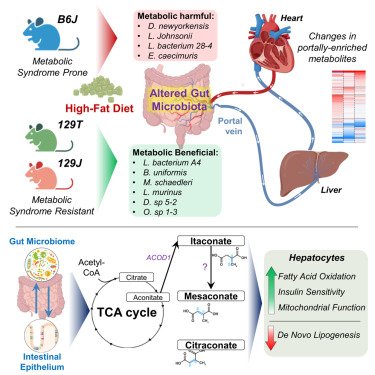
The study was unique in that it measured metabolites being delivered to the liver instead of measuring them in the feces, giving a clearer picture what is impacting metabolism in real time. The study found there was differences based upon diet, antibiotics, and the genetic background of the mice. Some key findings:
- What heads to the liver (portal blood) and what ends up heading to the body (peripheral blood) are different, indicating that the liver modifies or degrades metabolites that enter.
- Increasing fat intake decreased the number of metabolites heading to the liver from 111 to 48.
- Many of the metabolites differed in a mouse with a genetic background that made it resistant to metabolic syndrome.
- Antibiotics change the microbiome and thus it is not surprising that this also changes the metabolites in portal blood.
- Specific metabolites (called Mesaconate isomers) regulate insulin signaling, gene expression, and liver fat levels and these changed based upon diet and genetic background of the mice.
This work has developed an interesting model system that can be used in the future to tease out the specific metabolites and microorganisms that contribute to or prevent diabetes and obesity.